



Introduction: The Kashmir Tour Analogy
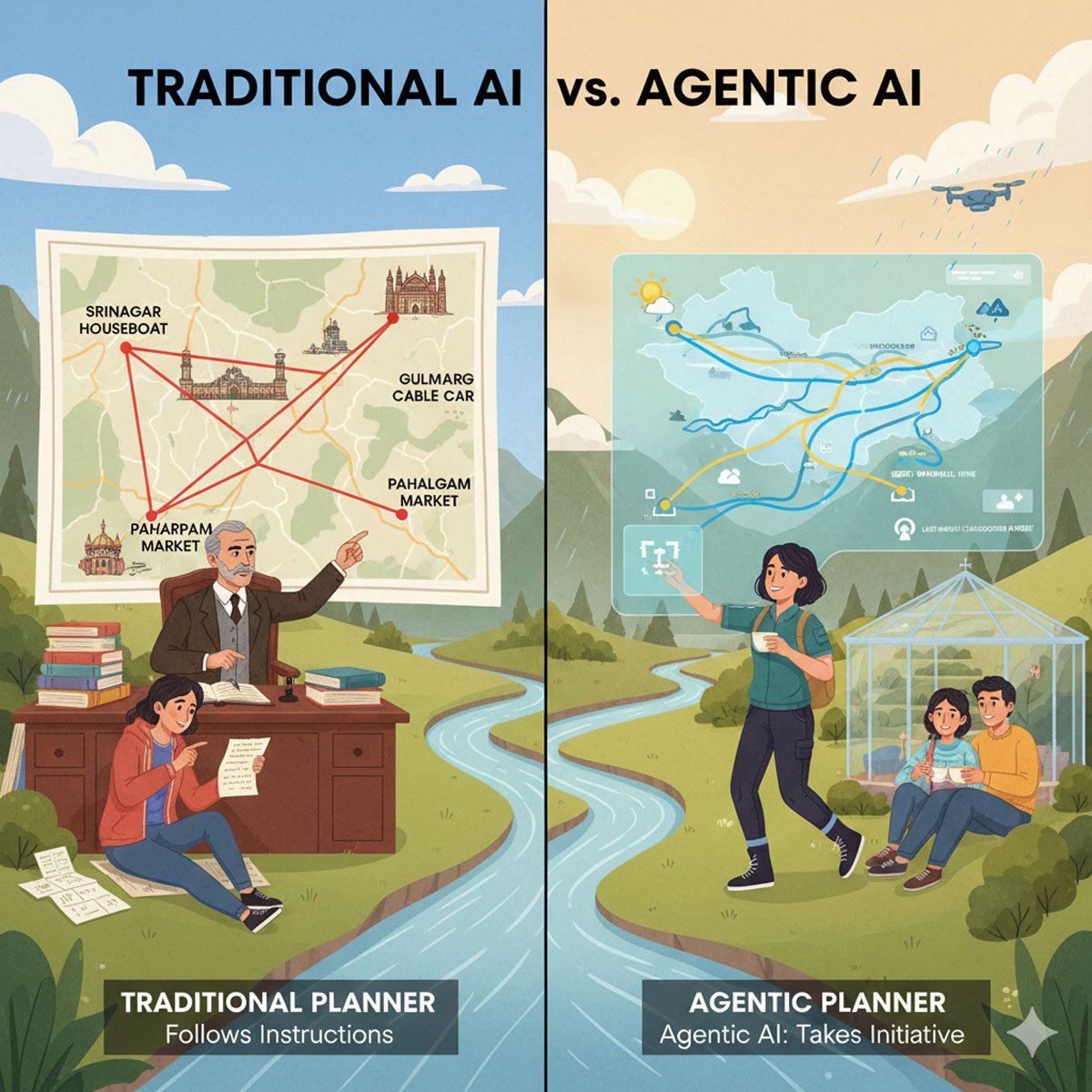
Imagine you’re planning a dream trip to Kashmir. You have two tour planners.
The first one — a traditional planner — follows your exact instructions: you tell them where to stay, what to eat, and which places to visit. They’re efficient, but only within the scope of your guidance.
Now, meet the agentic planner — they go beyond instructions. They anticipate bad weather and rearrange your itinerary, suggest hidden gems off the tourist map, and even handle last-minute changes without bothering you.
That’s the real difference between Traditional AI and Agentic AI in marketing. One waits for direction; the other takes initiative.
What Is Traditional AI in Marketing?
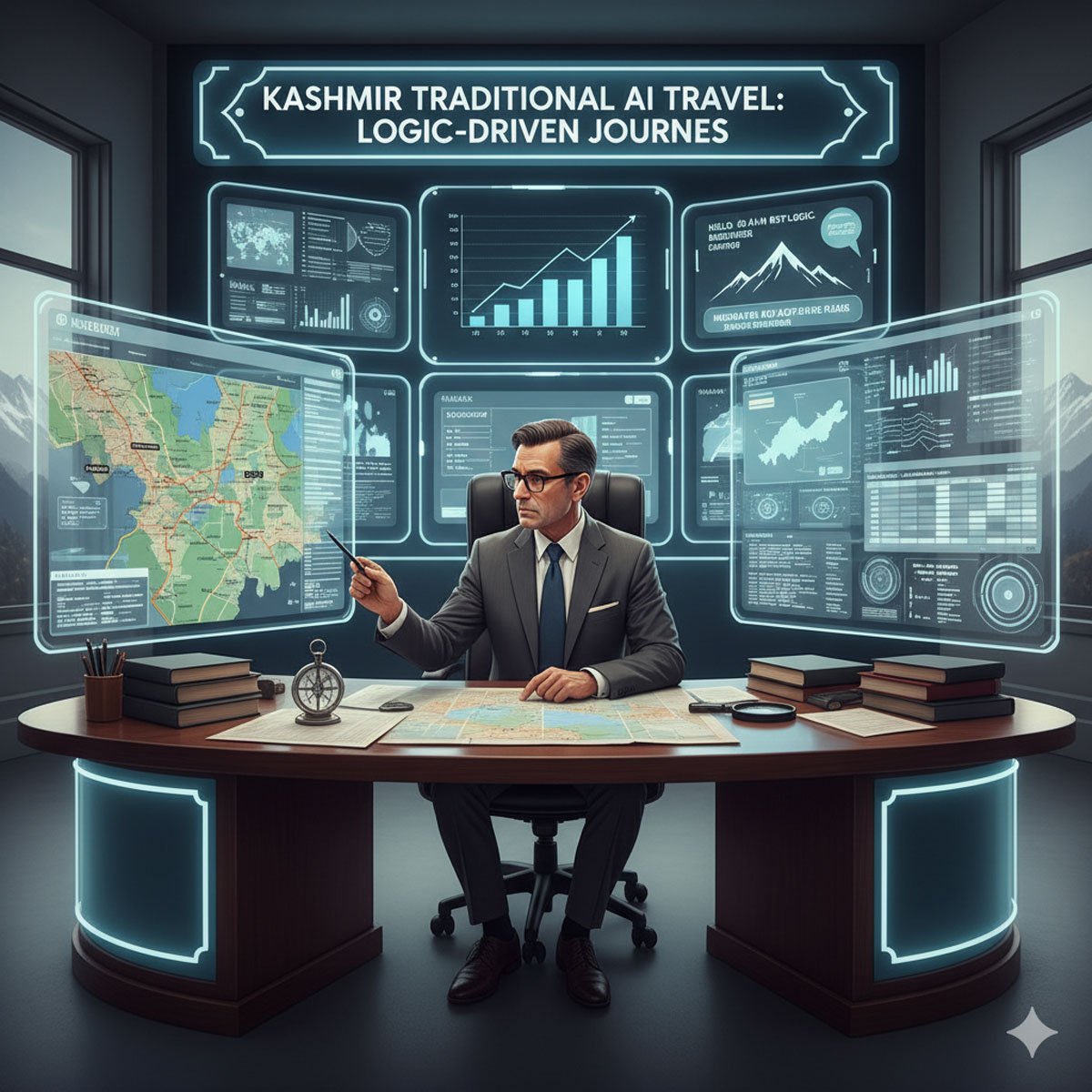
Traditional AI is like your first Kashmir planner. It works within a fixed framework. It analyzes data, predicts trends, and executes commands — but it doesn’t “think” beyond what it’s told.
It’s the backbone of marketing automation tools we’ve known for years: chatbots, product recommendation systems, or ad optimizers. These systems help, but they rely heavily on human guidance.
Key Traits of Traditional AI:
- Follows predefined rules and commands.
- Relies on human supervision for updates and corrections.
- Automates repetitive tasks like email scheduling or ad placement.
- Offers efficiency but lacks initiative.
So, while Traditional AI helps marketers save time, it’s still like a tour planner waiting for you to decide the next move.
The Smart Kashmir Planner: Understanding Agentic AI
Agentic AI, on the other hand, is your proactive Kashmir tour planner — it doesn’t just wait for instructions; it acts on behalf of you.
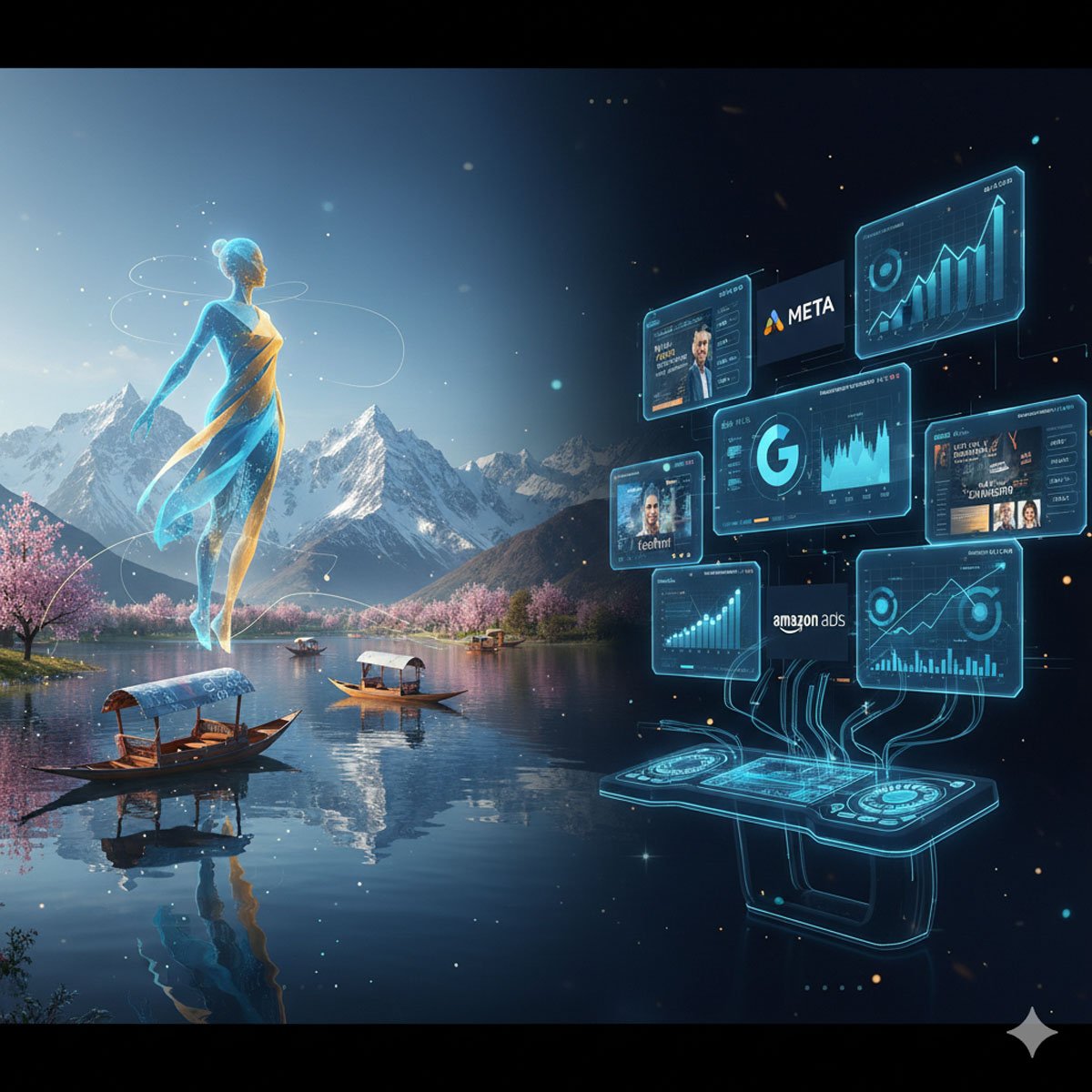
In marketing, Agentic AI is capable of setting goals, making real-time decisions, and executing multi-channel campaigns without constant human input. It understands your brand objectives, adapts to market shifts, and continuously optimizes performance.
For instance, imagine an Indian e-commerce brand using Agentic AI. It automatically plans ad strategies across Meta, Google, and Amazon Ads, monitors conversions, reallocates budgets, and adjusts creatives — all without the marketer lifting a finger.
Key Traits of Agentic AI:
- Autonomous and proactive in decision-making.
- Executes marketing campaigns from start to finish.
- Adapts dynamically to market trends and customer behavior.
- Reduces the need for constant human intervention.
Agentic AI vs. Traditional AI: Key Differences
Aspect | Traditional AI | Agentic AI |
Decision-making | Works on fixed inputs | Takes initiative based on goals |
Flexibility | Limited to pre-set patterns | Adapts to new situations |
Human Involvement | Needs constant supervision | Operates autonomously |
Learning Capability | Dependent on provided data | Learns continuously from live data |
Scope | Task automation | Strategic execution and optimization |
Why This Matters for Indian Marketers
India’s digital marketing space is buzzing — with startups, D2C brands, and SMEs racing for attention online. Traditional AI tools help automate operations, but they still demand frequent manual tweaks.
Agentic AI changes that game.
It empowers Indian marketers to focus on creativity, storytelling, and strategy while the
India’s digital marketing space is buzzing — with startups, D2C brands, and SMEs racing for attention online. Traditional AI tools help automate operations, but they still demand frequent manual tweaks.
Agentic AI changes that game.
It empowers Indian marketers to focus on creativity, storytelling, and strategy while the
Conclusion: The Smarter Way to Market
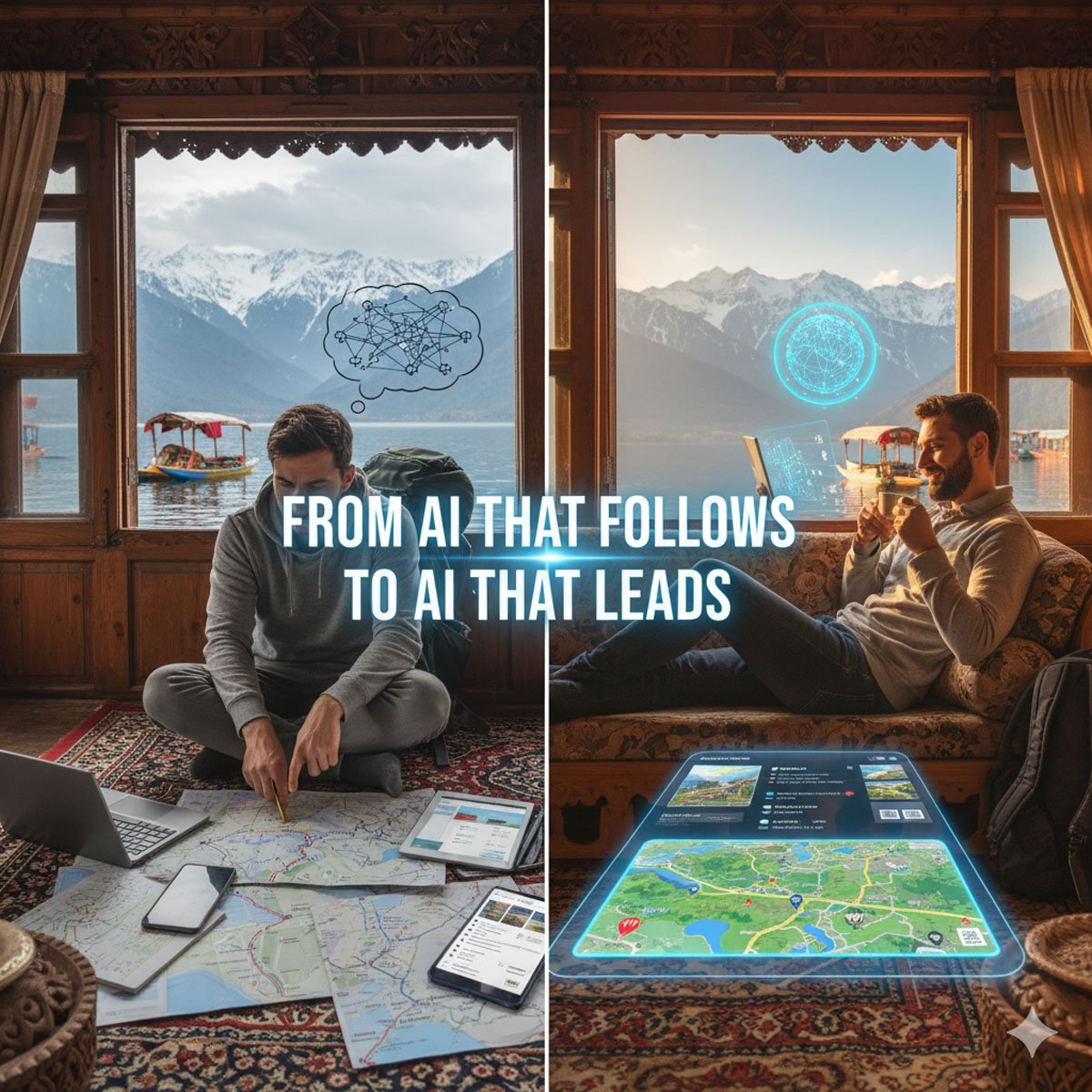
Just like you’d prefer a tour planner who manages everything for your Kashmir trip, businesses should adopt Agentic AI to simplify their marketing journeys.
Traditional AI still plays a vital role — it’s reliable and structured. But Agentic AI represents the next evolution — one that can act, learn, and improve without needing constant directions.
So, if you’re an Indian business looking to scale, it’s time to move from AI that follows to AI that leads.